I Ching Hexagram 13: Fellowship with Men易經第十三卦:同人卦
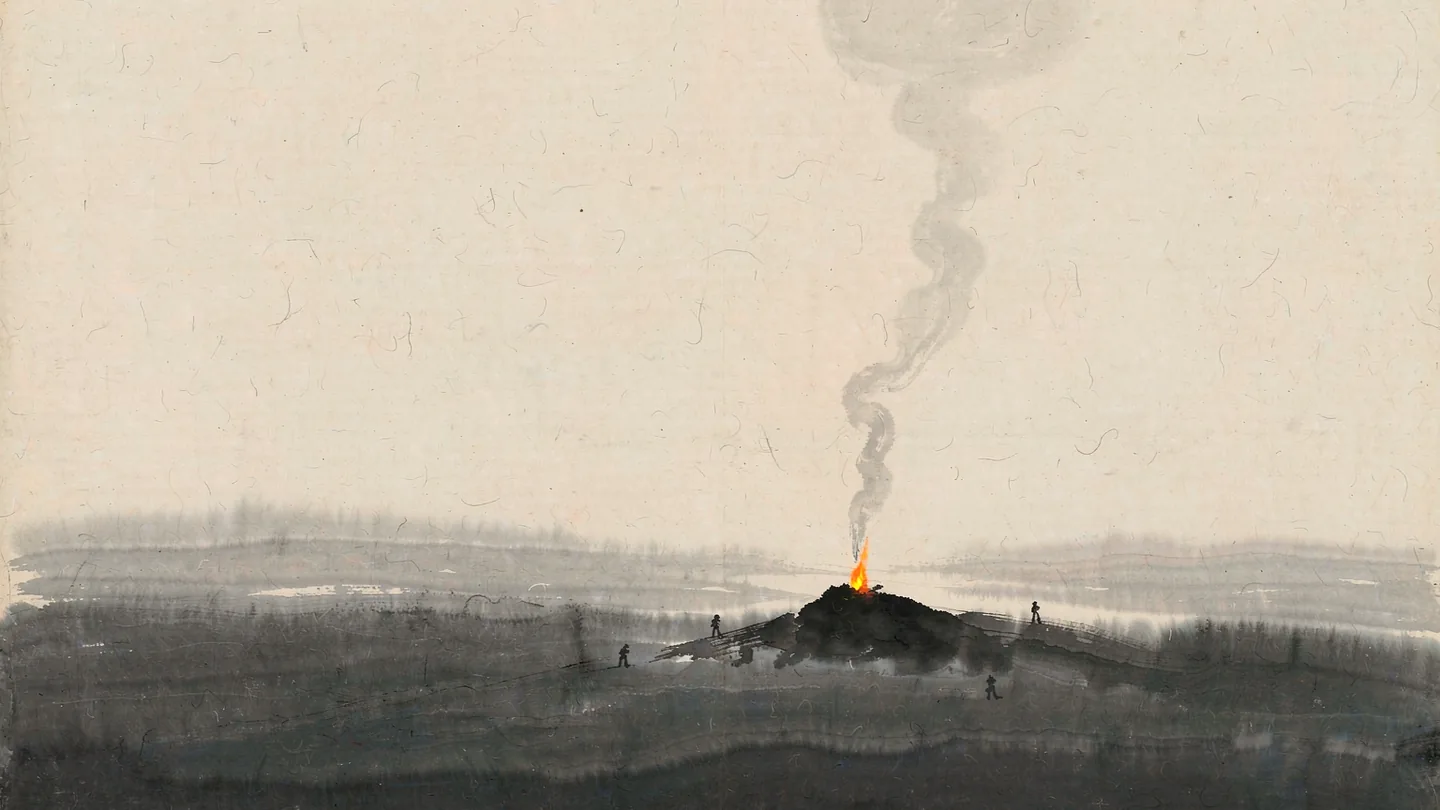
Heaven above, fire below — flame rising toward the sky, the one image in the book of people coming together because they are headed the same way. What Tong Ren (同人), the thirteenth hexagram, says about open alliances, the difference between a community and a clan, and why the meeting so often arrives only after the weeping.天在上,火在下——火焰向天空升去,這是全書中唯一一幅「人因為朝向同一個方向而聚在一起」的圖像。易經第十三卦同人(Tóng Rén)談的是開放的結盟、社群與宗族之間的差別,以及為什麼那場相遇往往要在號咷之後才到來。
What Is Hexagram 13?什麼是第十三卦?
Hexagram 13 is Fellowship with Men (同人, Tóng Rén), the thirteenth of the 64 hexagrams of the I Ching. Its structure is Heaven above, Fire below. Fire's whole nature is to rise, and Heaven is the highest thing there is, so in this arrangement the two trigrams move in the same direction rather than away from each other. That shared direction is the hexagram. Where Hexagram 12 described two forces separating and the channel between them going silent, Hexagram 13 describes two forces converging on the same high point — and then asks the only question that matters about convergence: are these people gathering because they are open, or because they are the same?第十三卦為同人卦(Tóng Rén),即易經六十四卦中的第十三卦。其卦象為上乾下離,天在上、火在下。火的本性就是上升,而天已經是最高之處,所以在這個排列裡,兩個卦是朝同一個方向運動的,而不是彼此遠離。那個共同的方向,就是此卦。第十二卦否描述的是兩股力量分離、其間的渠道歸於沉默;第十三卦同人描述的,則是兩股力量匯聚到同一個高點——然後提出關於匯聚唯一要緊的問題:這些人聚在一起,是因為他們開放,還是因為他們相同?
Structurally, Fellowship pairs the Qian trigram (Heaven, pure creative strength) above with Li (Fire, clarity, attachment) below. In Five Elements terms the relation is uneasy — fire controls metal, so the lower trigram acts on the upper one — and yet the two images move together, which is exactly the texture the hexagram describes. Fellowship is not harmony. It is agreement in aim between parties that still have friction, and the classical text is careful never to pretend otherwise. The single yin line of the hexagram is the second, sitting in the middle of the lower trigram: one soft place in a body of five hard ones, and every line's problem is what to do with it.從結構來看,同人上卦為乾卦(天,純粹的創造之力),下卦為離卦(火,光明、附麗)。以五行論,這個關係並不輕鬆——火剋金,下卦對上卦是有作用的——然而兩個卦象卻是同向而動,而這正是此卦所描述的那種質地。同人不是和諧。它是目標上的一致,發生在仍然帶有摩擦的各方之間,而經典文本從不假裝不是這樣。全卦唯一的陰爻是六二,居下卦之中:在五個剛爻之中,只有這一處柔軟的地方,而每一爻的難題,都是該拿它怎麼辦。
The Judgment: Fellowship in the Open卦辭:同人于野,亨
The judgment is short and unusually generous: "Fellowship with men in the open. Success. It is favourable to cross the great water. It is favourable for the gentleman to persevere." Almost every clause is a spatial instruction. 野 is the open country beyond the walls — the field, the plain, ground that no clan owns. To hold fellowship there is to meet on neutral soil, which is why the same sentence can promise that it is favourable to cross the great water: you go outside your own territory and find people who were never yours.卦辭簡短,而且異常慷慨:「同人于野,亨。利涉大川,利君子貞。」幾乎每一個分句都是關於空間的指示。「野」是城牆之外的曠野——田野、平原、不屬於任何宗族的地面。在那裡與人相同,就是在中立的地面上相遇;這也是為什麼同一句話可以接著承諾「利涉大川」:你走出自己的地盤,遇到一些從來不屬於你的人。
"It is favourable to cross the great water" is the hexagram's least quoted and most practical line. In the I Ching that phrase normally marks a genuine undertaking with real exposure — a journey, a venture, a commitment that cannot be taken back. Tong Ren places it directly after the instruction to gather in the open, which reads as a warning against the safe version of belonging. A group that never crosses anything is not an alliance, it is a habit. The risk of going outside is the price of the thing the hexagram is promising.「利涉大川」是此卦最少被引用、卻最實用的一句。在《易經》裡,這句話通常標誌著一件真正有風險的大事——一趟遠行、一場投入、一個收不回來的承諾。同人把它直接放在「在曠野聚人」的指示之後,讀起來是對「歸屬的安全版本」的一句警告。一個從不跨越任何東西的群體,不是聯盟,而是習慣。走出去的風險,正是此卦所承諾之事的代價。
Then the final clause, it is favourable for the gentleman to persevere — the same phrase that Hexagram 12 explicitly withheld. That contrast is the cleanest way to feel the difference between the two hexagrams. In Pi, firmness was not rewarded because the channel was closed and effort could not be converted into progress. In Tong Ren the channel is open again, so firmness is not merely permitted, it is the thing that keeps an open group from dissolving into a pleasant crowd. Fellowship without principle is just company.然後是最後一句:「利君子貞」——正是第十二卦明確收回的那句話。這個對照,是感受這兩卦差別最乾淨的方式。在否,堅守沒有回報,因為渠道是關閉的,力氣無法兌換成進展。在同人,渠道重新打開了,於是堅守不只是被允許,它正是讓一個開放的群體不至於散成一群和氣的人的那樣東西。沒有原則的同人,只是作伴。
The Image: Heaven and Fire象辭:天與火,同人
The Image commentary reads: "Heaven and fire: the image of Fellowship. Thus the superior man organizes the clans and distinguishes things." The second half is the surprise. You would expect a hexagram about togetherness to counsel merging, blurring, dissolving distinctions — and instead it tells the superior man to sort and differentiate. 類族辨物: to group the clans and to tell things apart.《象傳》寫道:「天與火,同人。君子以類族辨物。」令人意外的是後半句。你原本會期待一卦談「合」的卦去主張融合、模糊、消泯差別——它卻告訴君子要去分類、去辨別。「類族辨物」:把宗族歸類,把事情分辨清楚。
Read it beside the judgment and the logic closes: fellowship in the open only works if everyone can see clearly who is who and what is what. Fire is the trigram of clarity, and clarity is what makes an open gathering safe. A group that refuses to name differences does not become equal, it becomes vague — and vague groups are exactly where the old clans quietly reconstitute themselves under new names. The Image is therefore not a contradiction of the judgment but its condition: distinguish honestly, and the meeting in the open can hold. Blur everything, and you are back at line 2.把它與卦辭並讀,邏輯就閉合了:曠野中的同人,只有在每個人都能看清楚誰是誰、什麼是什麼的時候才成立。火是光明之卦,而光明正是讓一場開放的聚會變得安全的東西。一個拒絕指認差異的群體,不會因此變得平等,只會變得含糊——而含糊的群體,正是舊宗族換個名字悄悄重建自己的地方。所以《象傳》不是對卦辭的否定,而是它的前提:誠實地辨別,曠野中的相遇才撐得住。把一切都模糊掉,你就回到了第二爻。
The Six Lines of Hexagram 13: From the Gate to the Open Field同人六爻:自門內到曠野
The six lines form a single widening: a circle that starts at the gate, closes into a clan, arms itself, refuses an attack, breaks into grief and laughter, and finally spreads so wide that nothing about it is dramatic any more. The geography is the argument:六爻構成一次單一的擴張:一個從門口開始的圈子,收窄成宗族,武裝起來,又拒絕了一次進攻,然後在號咷與笑聲中裂開,最後寬到再也沒有任何戲劇性。地理即是論證:
| Line爻 | Text爻辭 | Meaning & Timing涵義與時機 |
|---|---|---|
| 1 (bottom)1(最下) | Fellowship at the gate: no blame.同人于門,無咎。 | The easiest and least compromised beginning in the whole book: meeting people at the gate, on the threshold, where nobody has yet asked anyone to declare allegiance. The line carries no blame because nothing has been overpromised. Its practical counsel is to let first contact be first contact — the gate is a good place to meet and a bad place to build a headquarters. Note how modest the line is: the hexagram that ends in the open country starts with a conversation at a doorway.這是全書中最輕鬆、也最少妥協的一個開始:在門口、在門檻上與人相遇,那裡還沒有人要求誰先表態效忠。此爻之所以「無咎」,是因為什麼都還沒有被過度承諾。它在實務上的建議,是讓第一次接觸就只是第一次接觸——門口是個適合相遇的地方,也是個不適合蓋總部的地方。請注意此爻有多謙卑:這一卦最後走到曠野,而它是從門口的一場談話開始的。 |
| 22 | Fellowship in the clan: humiliation.同人于宗,吝。 | The hexagram's one yin line, and its whole warning. 宗 is the ancestral clan: the people you did not choose and cannot leave. A group sealed inside its own kind feels like loyalty from the inside and looks like exclusion from the outside, and the text uses the mildest possible word for the result — 吝, stingy, narrowed, a little shameful. Not disaster, just smallness. If a reading lands here, the useful question is not whether the group is warm but whether anyone new could ever get in.全卦唯一的陰爻,也是全卦的警告所在。「宗」是宗族:那些你沒有選擇、也離不開的人。一個封在自己同類之中的群體,從裡面感覺像忠誠,從外面看則是排除;而經文對這個結果用了最溫和的一個字——「吝」,吝嗇、狹窄、有點難為情。不是災難,只是小。若占得此爻,有用的問題不是這個群體溫不溫暖,而是:任何一個新的人,究竟進不進得來? |
| 33 | Hiding weapons in the thicket, climbing the high hill: for three years he does not rise.伏戎于莽,升其高陵,三歲不興。 | The darkest line, and the most recognisable: a group that has stopped trusting and started preparing. Weapons hidden in the brush, a lookout posted on high ground, and then the detail that makes it a diagnosis — three years and nothing happens. Armed vigilance is expensive and it produces nothing except more of itself. Note that this line sits directly beneath the fourth, which is the line that chooses not to attack; the pair is deliberate. The standoff is not broken by winning it, it is broken by someone declining to use the advantage they have.最幽暗的一爻,也最容易被認出來:一個已經停止信任、開始備戰的群體。兵器藏在草叢裡、哨兵派上高地,接著是那句讓它成為診斷的細節——三年,什麼都沒發生。武裝的警戒很貴,而它除了生產更多警戒之外,什麼也生產不出來。請注意此爻正位於第四爻之下,而第四爻正是「選擇不進攻」的那一爻;這個配對是刻意的。僵局不是靠贏得它來打破的,而是靠有人放棄使用自己手上的優勢。 |
| 44 | Climbing the wall, but not attacking: good fortune.乘其墉,弗克攻,吉。 | One of the strangest good-fortune lines in the I Ching: the man is on the wall, he has the position, the height and the justification — and he does not attack. 弗克攻 is usually read as "he does not press the attack", and the text calls this 吉. The line knows that the first party to strike in a dispute over belonging wins the moment and loses the fellowship. Practically: if you have the advantage in an argument about who is in and who is out, and you use it, you have settled the question by ending the thing the hexagram is about.《易經》中最奇特的一個吉爻之一:人已經上了城牆,佔了位置、佔了高度、也佔了道理——而他沒有進攻。「弗克攻」通常讀作「不發動攻擊」,而經文稱之為「吉」。此爻知道:在一場關於「誰屬於這裡」的爭執中,先動手的那一方贏得了那一刻,卻失去了同人。落到實處:如果你在一場「誰在裡面、誰在外面」的爭論中佔了上風,而你用了它,你就是用結束這件事的方式,解決了這個問題——而這件事正是此卦全部的重點。 |
| 55 | The fellows first weep and wail, then laugh. The great army conquers; they meet.同人,先號咷而後笑,大師克相遇。 | The heart of the hexagram and one of its most quoted lines. 先號咷而後笑 — first the wailing, then the laughter — is not a promise that grief is rewarded; it is a description of how real meetings actually happen between parties that have been apart. Something has to be mourned first: the version of the story each side was holding, the years spent on the wrong side of the wall. 大師克相遇, "the great army conquers, and they meet", is often read as the forces that separated them finally being overcome — the meeting is the conquest, not a reward for it. If a reading lands here, expect the reconciliation to be loud before it is warm.全卦的核心,也是被引用最多的爻辭之一。「先號咷而後笑」——先哭號,然後才笑——不是承諾悲傷會得到回報;它描述的是分開已久的各方,真正的相遇究竟如何發生。有些東西必須先被哀悼:各方各自堅持的那個版本、花在牆的另一邊的那些年。「大師克相遇」,通常讀作「那支把他們分開的力量終於被克服」——相遇本身就是那場克服,而不是它的獎賞。若占得此爻,預期那場和解會先吵鬧,然後才溫暖。 |
| 6 (top)6(上爻) | Fellowship in the meadow: no regret.同人于郊,無悔。 | The hexagram ends outside the walls but short of the open country: 郊 is the meadow at the edge of town, neither inside nor fully out. The line carries no praise and no blame — only 無悔, no regret. This is the honest ending of most real attempts at fellowship: a group that got further than the clan and not as far as the plain, that includes a few people it did not have to, and that has nothing to boast about. The classical commentaries treat it as a restatement of the judgment's ideal seen from a distance: not achieved, but not betrayed either, and therefore without regret.此卦結束在城牆之外,卻還沒到曠野:「郊」是城邑邊緣的郊野,既不在裡面,也沒有完全出去。此爻既無褒也無貶——只有「無悔」。這是大多數真實的同人嘗試誠實的結局:一個走得比宗族遠、卻沒走到平原的群體,它多接納了幾個人,而那些人並不是它非接不可的,也沒有什麼好誇口的。歷代註家把它讀作卦辭理想從遠處的一次回望:沒有達成,但也沒有背棄,因此無悔。 |
Why the Circle Widens and Then Stops Widening為什麼這個圈子會擴大,然後停止擴大
Read the table from bottom to top and the geography does the teaching: gate, clan, thicket, wall, army, meadow. The circle starts at a doorway, immediately contracts into a family, arms itself, and only then — at the fourth line, the first line of the upper trigram — begins to widen again. Notice that the widening does not come from the lower trigram at all. Fire's three lines are all about belonging at close range: meeting, excluding, defending. It takes Heaven's lines to make the circle large, and even then the best it manages is the meadow at the edge of town. The pattern is a warning about scope. Groups do not become open by feeling warmer; they become open when someone at the top declines an advantage, absorbs a grief, and lets the boundary stay a boundary rather than a wall. And note where the hexagram refuses to go: it never promises the open country will be reached. It promises that the attempt, honestly made, ends without regret.由下往上讀這張表,地理本身就在教課:門、宗、莽、墉、師、郊。圈子從一道門開始,立刻收縮成一個家族,武裝起來,然後才——在第四爻,也就是上卦的第一爻——重新開始變寬。請注意,變寬這件事完全不來自下卦。火的三爻談的全是近距離的歸屬:相遇、排除、防衛。要讓圈子變大,得靠天之三爻;而即便是天,最多也只做到城邑邊緣的郊野。這個規律是關於規模的警告。群體不會因為感覺更溫暖而變得開放;它們是在高處有人放棄了一項優勢、承接了一場悲傷、並且讓邊界仍然是邊界而不是高牆的時候,才變得開放的。也請注意此卦拒絕去到哪裡:它從不承諾會抵達曠野。它承諾的是,這場誠實的嘗試,最後無悔。
Hexagram 13 in Love & Relationships同人卦在感情與關係中的解讀
In a love reading, Tong Ren describes a bond that has to be visible before it can be trusted, and that works best when the two people are joined by something they both care about rather than by exclusivity. It is the opposite of the romantic ideal in which the couple is a fortress: here the health of the relationship is measured by how easy it is for other people to be near it.在感情占卜中,同人描述的是一段必須被看見才能被信任的關係,而且它最順的時候,是兩個人被某個他們都在意的東西連在一起,而不是被「只屬於彼此」連在一起。它與那種「伴侶是一座堡壘」的浪漫理想正好相反:在此,這段關係的健康程度,是用「別人容不容易靠近它」來衡量的。
Line 1 is the easy beginning: meeting through a shared circle, at a gate, with nothing declared. Line 2 is the one most couples should read twice, because it flatters itself so well — a relationship sealed inside its own small clan, suspicious of friends, of families, of anyone who might dilute it. From inside that feels like devotion; the text calls it 吝, a narrowing. Line 3 is the hidden weapon: the jealousy that gets stored rather than spoken, the alliance formed against someone, the affection that has quietly become a campaign with a lookout on the hill. Line 4 is the turn, and it is a choice rather than a feeling — you have the advantage in the argument and you do not use it. Line 5 is the line lovers remember: first the weeping, then the laughter. It says plainly that the real meeting often comes after the fight that clears the air, and that the fight is not the opposite of the reunion but its first half. Line 6 is the quiet ending — a bond wide enough that it needs no drama to prove it exists.初爻是輕鬆的開始:透過一個共同的圈子、在門口相識,什麼都還沒表態。二爻是伴侶最該讀兩次的一爻,因為它把自己包裝得太好了——一段封在自己小宗族裡的關係,對朋友、對家人、對任何可能稀釋它的人都帶著疑心。從裡面感覺像深情;經文叫它「吝」,一種變窄。三爻是藏起來的兵器:收著沒說出口的嫉妒、針對某個人結成的同盟、悄悄變成一場有人在高地放哨的行動的感情。四爻是轉折,而它是一個選擇,不是一種感覺——你在爭執中佔了上風,而你不用它。五爻是伴侶會記住的那一爻:先號咷,後笑。它把話說得很白:真正的相遇往往在那一場把空氣清乾淨的爭吵之後到來,而那場爭吵不是重逢的反面,而是重逢的前半段。上爻是安靜的結局——一段寬到不需要用戲劇來證明自己存在的關係。
Hexagram 13 in Career & Major Decisions同人卦在事業與重大決策中的解讀
At work, Tong Ren is the hexagram of coalitions, hiring, partnerships and any decision that requires other people to say yes. Its first question is always the same and always uncomfortable: is this group open, or is it a clan with a logo? Both can look identical from the outside on a good day, and the difference only shows when someone outside asks to come in:在工作上,同人是關於聯盟、招聘、合作,以及任何需要別人點頭的決定的卦。它的第一個問題永遠一樣,也永遠讓人不舒服:這個群體是開放的,還是一個有 logo 的宗族?在順利的日子裡,兩者從外面看可能一模一樣,差別只會在「外面有人請求進來」的時候才顯現:
- Just met someone useful? Line 1 — keep it at the gate for now. First contact without declared allegiance is the cleanest thing in this hexagram; enjoy it and do not rush to convert it into a commitment.剛認識了一個有用的人?初爻——先把它留在門口。不帶表態的第一次接觸,是此卦中最乾淨的東西;享受它,別急著把它兌換成承諾。
- Hiring, or building a team? Line 2 — the temptation is to hire people like the ones already there. It feels like culture fit and it reads, from outside, as a closed shop. The hexagram calls the result 吝: not a scandal, just a ceiling.在招人,或在組團隊?二爻——誘惑是找和現有成員相似的人。那感覺像文化契合,從外面看卻像一家不招外人的店。此卦稱這個結果為「吝」:不是醜聞,只是天花板。
- In a standoff with a rival? Line 3 — notice the cost. Hidden preparation, information withheld, a lookout posted: three years of that produces nothing but more of itself.與對手僵持中?三爻——注意代價。暗中準備、扣住資訊、派人盯著:這樣三年下來,只會生產出更多同樣的東西。
- Holding the advantage in a dispute? Line 4 — this is the line to obey. You are on the wall; do not attack. Winning the point by force ends the relationship the point was supposed to serve.在一場爭議中佔上風?四爻——這是該服從的一爻。你已經在城牆上了;不要進攻。用強力贏下那一點,會結束那一點原本要服務的那段關係。
- Negotiating a merger or a return? Line 5 — expect the loud part first. Grievances that were never voiced have to be voiced before anything can be signed, and the deal that follows is stronger for it.在談合併,或在談回頭?五爻——預期先有吵鬧的那一段。從沒說出口的委屈必須先被說出來,之後才簽得下任何東西;而接下來的那份協議,會因為這樣而更牢固。
- Built something that half worked? Line 6 — no regret. Getting further than the clan and not as far as the plain is the normal outcome, and the text does not scold you for it.做出了一個只成了一半的東西?上爻——無悔。走得比宗族遠、卻沒走到平原,是正常的結果,經文不會為此責備你。
The Image's instruction is the one most often skipped in practice: organize the clans and distinguish things. In an organisation this means naming roles, differences, disagreements and interests out loud instead of smoothing them into a general warmth. Teams that cannot say who owns what do not become collaborative, they become vague, and vague teams are where informal clans quietly take over. Openness is a by-product of clarity, not of niceness.《象傳》的指示,是實務中最常被跳過的一條:類族辨物。在一個組織裡,這意味著把角色、差異、分歧與利益明白說出來,而不是把它們抹平成一團和氣。說不清「誰負責什麼」的團隊,不會因此變得協作,只會變得含糊;而含糊的團隊,正是非正式宗族悄悄接手的地方。開放是清楚的副產品,不是和氣的副產品。
Hexagram 13 and Your Birth Chart同人卦與您的八字命盤
The I Ching and Bazi share one root: the interplay of yin and yang and the Five Elements. Hexagram 13 places Heaven (Qian, Metal) above Fire (Li) — and unlike Hexagram 11 and 12, the elemental relation here is not comfortable: 火剋金, fire controls metal. The lower trigram acts on the upper one. Yet the two images rise together, which is why Tong Ren is such a precise portrait of alliance: it does not require the parties to be compatible, only to be aimed at the same height.《易經》與八字同出一源:皆源於陰陽互動與五行生剋。同人卦將天(乾,金)置於火(離)之上——而與第十一、十二卦不同,這裡的五行關係並不輕鬆:火剋金,下卦對上卦是有作用的。然而兩個卦象卻一同上升,這正是同人為何如此精準地描繪了結盟:它不要求各方相容,只要求他們朝向同一個高度。
If your Day Master is Metal, Tong Ren describes a season in which your element is the one being worked on: you are the thing fire is testing, and the hexagram's advice is line 4 rather than line 3 — do not convert the pressure into a fight you would win. A strong-Metal chart is likely to be tested at line 2, where the easy move is to withdraw into people who already agree with you. If your Day Master is Fire, you are the rising trigram in this arrangement: your clarity is what makes an open group possible, and the risk is line 3, where clarity curdles into suspicion and the lookout goes up the hill. If your Day Master is Earth, you sit between the two in the productive cycle, and the hexagram reads as the go-between — the one who can introduce parties that would otherwise never meet, provided you do not become the clan's gatekeeper. Your Bazi chart will show which of the six positions you are actually standing in — gate, clan, thicket, wall, army or meadow — and therefore which single line is worth reading twice.若您的日主屬金,同人描述的是一段「您是被加工的那個元素」的時期:您正是火在檢驗的東西,而此卦的建議是第四爻而不是第三爻——不要把那股壓力,轉換成一場您會贏的爭執。身強的金命盤,則可能在第二爻受考驗:那裡輕鬆的做法,是退回一群本來就同意您的人之中。若您的日主屬火,在這個排列裡您就是上升的那一卦:您的光明是讓一個開放群體得以成立的原因,而風險在第三爻——光明在那裡凝成了疑心,哨兵上了高地。若您的日主屬土,在相生的循環裡您正坐在兩者之間,此卦讀起來就是那個中間人——那個能把原本永遠不會相遇的各方介紹給彼此的人,只要您自己不成為宗族的守門人。您的八字命盤會顯示您實際站在六個位置中的哪一個——門、宗、莽、墉、師,還是郊——因此也會顯示,哪一爻值得您讀兩次。
Frequently Asked Questions常見問題
What does Hexagram 13 mean in the I Ching?易經第十三卦(同人卦)代表什麼意義?
It means Fellowship with Men (Tong Ren 同人): Heaven above Fire, flame rising toward the sky — the arrangement in which the two trigrams move in the same direction instead of apart, the exact opposite of Hexagram 12. Its judgment reads: "Fellowship with men in the open. Success. It is favourable to cross the great water. It is favourable for the gentleman to persevere." The reading is about association that is public rather than private — people bound by a shared aim rather than by clan, faction or favour. The whole hexagram tests one question, whether a group is open enough to include the person who does not already belong, and its six lines run from the gate through the closed clan and an armed standoff to grief, meeting, and a fellowship wide enough to be unremarkable.它代表「同人」(Tóng Rén 同人):天在火之上,火焰向天空升起——這是兩個卦朝同一方向、而非彼此遠離的排列,也正是第十二卦的完全相反。卦辭說:「同人于野,亨。利涉大川,利君子貞。」這段解讀談的是公開而非私密的結合——人們因為共同的目標而連在一起,而不是因為宗族、派系或人情。整卦只在檢驗一個問題:一個群體是否開放得足以接納那個本來不屬於它的人;而六爻從門口開始,穿過封閉的宗族與一場武裝的僵持,走到悲傷、相遇,最後是一個寬到再無戲劇性的同人。
What does "fellowship in the open" (同人于野) mean?「同人于野」是什麼意思?
野 is the open country outside the walls — the field, the plain, ground no clan owns. To hold fellowship there is to meet on neutral soil, which is why the judgment can promise it is favourable to cross the great water: you cross a boundary and meet people who were never yours. The contrast is line 2, 同人于宗, fellowship inside the clan, which the text calls 吝 — stingy, humiliating, a narrowing. The two phrases are the whole argument of the hexagram in miniature. A group that only gathers its own kind is not fellowship, it is family business; and the classical reading is blunt that such a group, however warm, cannot do the large thing the judgment promises.「野」是城牆之外的曠野——田野、平原、不屬於任何宗族的地面。在那裡與人相同,就是在中立的地面上相遇;這也是為什麼卦辭可以接著承諾「利涉大川」:你跨越一道邊界,遇到一些從來不屬於你的人。與之對照的是第二爻「同人于宗」——在宗族之內與人相同,經文稱之為「吝」:吝嗇、難為情、一種變窄。這兩句話,就是此卦全部論證的縮影。一個只聚集自己同類的群體不是同人,而是家務事;而古典的解讀說得很直白:這樣的群體無論多溫暖,都做不成卦辭所承諾的那件大事。
What does Hexagram 13 mean for love?第十三卦(同人卦)在感情上代表什麼意思?
It usually describes a bond that has to be visible before it can be trusted, and one that works best when the two people are joined by something they both care about rather than by exclusivity. Line 1 is the easy beginning, meeting through a shared circle with nothing declared. Line 2 is the warning most couples should read twice: a relationship sealed inside its own small clan flatters itself as devotion, but the text calls it 吝, a narrowing. Line 3 is the hidden weapon — jealousy stored rather than spoken, an alliance formed against someone. Line 4 is the choice not to attack, and it is read as good fortune. Line 5 is the famous one — first weeping, then laughter — which says the real meeting often comes after the fight that clears the air. Line 6 is the quiet ending: fellowship wide enough to need no drama at all.它通常描述的是一段必須被看見才能被信任的關係,而且它最順的時候,是兩個人被某個他們都在意的東西連在一起,而不是被「只屬於彼此」連在一起。初爻是輕鬆的開始:透過共同的圈子相識,什麼都還沒表態。二爻是伴侶最該讀兩次的警告:一段封在自己小宗族裡的關係,會把自己美化成深情,而經文叫它「吝」,一種變窄。三爻是藏起來的兵器——收著沒說的嫉妒、針對某個人結成的同盟。四爻是選擇不進攻,而它被讀作吉。五爻是最有名的那一爻——先號咷、後笑——它說真正的相遇,往往在那一場把空氣清乾淨的爭吵之後到來。上爻是安靜的結局:一段寬到完全不需要戲劇的關係。
How is Hexagram 13 different from Hexagram 12?第十三卦與第十二卦有何不同?
They are consecutive and structurally opposed, which is why they are usually read as a pair. Hexagram 12 puts Heaven above Earth: heaven's light rises and earth's weight sinks, so the currents move away from each other and the middle stays empty — communication stops. Hexagram 13 puts Heaven above Fire: flame naturally rises, and Heaven is already the highest thing there is, so fire moves toward heaven instead of away from it. The trigrams differ, but the motion is what matters. In Pi the parts separate and nothing is shared; in Tong Ren the parts converge on something higher than either of them, and the hexagram asks whether that convergence is open or merely tribal. In practice Pi is read as a closed season and Tong Ren as the season of alliance — with the persistent warning that an alliance can be a clan wearing the costume of a community.兩卦相鄰,而且在結構上彼此對立,因此通常成對解讀。第十二卦否將天置於地之上:天的清陽上升、地的重濁下沉,兩股氣流彼此遠離,中間因此空著——交流中斷。第十三卦同人將天置於火之上:火焰本性上升,而天已經是最高之處,於是火是朝天的方向去,而不是離開它。兩個卦不同,但關鍵在於運動。在否,各部分分離,什麼都不共用;在同人,各部分匯聚到一個比它們都高的東西上,而此卦接著問:這場匯聚是開放的,還是只是部落式的。實務上,否被讀作閉塞的季節,同人被讀作結盟的季節——並且永遠附帶那句警告:一場結盟,也可能是一個穿著社群外衣的宗族。
Know Your Element, Know Your Circle瞭解您的五行,看清您的圈子
Enter your birth date and time to generate your free Bazi chart — see which of the Five Elements leads your chart, and what that says about how you gather people: whether you build an open circle that anyone can walk into, or a warm, comfortable clan that nobody new ever enters.輸入您的出生日期與時間,即可免費生成您的八字命盤——查看五行中哪一個元素主導您的命盤,以及這如何說明您聚集人群的方式:您是建立一個誰都走得進來的開放圈子,還是一個溫暖舒適、卻永遠沒有新人進得去的宗族。
Generate My Chart生成我的命盤Further Reading延伸閱讀
Eight guides that continue this thread八篇接著這條線讀下去的指南- Bagua Trigrams Meaning: The Eight Trigrams ExplainedDiscover the eight Bagua trigrams (Qian, Kun, Zhen, Xun, Kan, Li, Gen, Dui): their symbols, elements, personality…八卦涵義:八卦完整解析探索八卦(乾、坤、震、巽、坎、離、艮、兌):包含符號、五行、特質…
- Bazi Day Master: Your Core Personality in Chinese AstrologyWhat is your Bazi Day Master? Learn how the ten Heavenly Stems reveal your core personality, strengths, and…八字日主:你在中國占星中的核心性格什麼是八字日主?了解十天干如何揭示你的核心性格、優勢與…
- How to Read a Bazi Chart: Step-by-Step Guide for BeginnersLearn how to read a Bazi chart step by step. Understand the Four Pillars, Day Master, Ten Gods, and Luck Pillars in…如何看懂八字命盤:初學者逐步指南一步步學習如何看懂八字命盤。深入了解四柱、日主、十神與大運…
- I Ching Hexagram 7: The Army (Shi)Hexagram 7, The Army (Shi), shows Water hidden within Earth — organized strength moving by discipline. Meaning…《易經》第七卦:師卦(Shi)師卦展現地中藏水之象——紀律嚴明的有組織力量。卦義…
- I Ching Hexagram 8: Holding Together (Bi)Hexagram 8, Holding Together (Bi), shows Water above Earth — the union that forms when people find the one…《易經》第八卦:比卦(Bi)比卦為水在大地之上——當人們找到可以歸附的那一個對象時…
- I Ching Hexagram 11: Peace (Tai)Hexagram 11, Peace (Tai), shows Earth above Heaven — the two primal forces meeting instead of moving apart…《易經》第十一卦:泰卦(Tai)泰卦為地在天之上——兩股原始力量相向而行,而非彼此遠離。卦義、六爻、感情與…
- I Ching Hexagram 12: Standstill (Pi)Hexagram 12, Standstill (Pi), shows Heaven above Earth — the two primal forces moving apart instead of meeting…《易經》第十二卦:否卦(Pi)否卦為天在地之上——天地不交,兩氣背離。卦義、六爻、感情與…
- I Ching Hexagram Meanings: All 64 Hexagrams ExplainedThe complete list of all 64 I Ching hexagrams with their Chinese names, trigram structure, and core meaning…易經六十四卦詳解:全部 64 卦完整說明六十四卦完整列表,包含卦名、卦象結構與核心涵義…