I Ching Hexagram 4: Youthful Folly易經第 4 卦:蒙卦
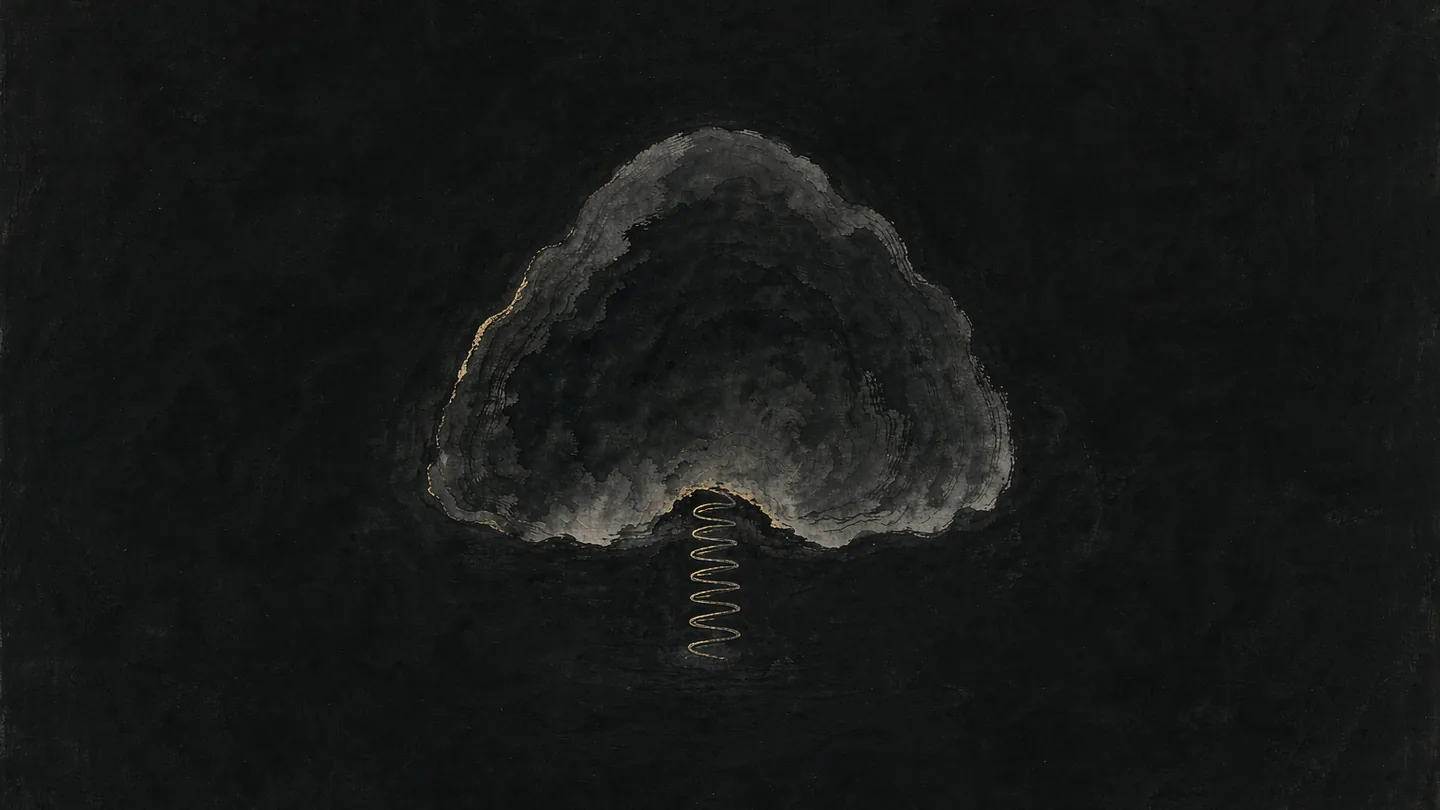
A spring rising beneath the mountain — water just leaving the rock, still murky. What Meng (蒙), the fourth hexagram of the I Ching, says about being a beginner, finding the right teacher, and the courage of admitting you don't know.山下出泉——剛湧出岩石的水,依然渾濁。易經第四卦「蒙」講述了關於身為新手、尋找合適導師,以及勇於承認自己「不知道」的勇氣。
What Is Hexagram 4?什麼是第 4 卦?
Hexagram 4 is Youthful Folly (蒙, Meng), the fourth of the 64 hexagrams of the I Ching. It places the Water trigram below the Mountain trigram: a spring emerging from beneath a still mountain, its water fresh from the rock crevice and still cloudy. The judgment is one of the most striking in the whole book — it is spoken from the teacher's side: Youthful Folly has success. It is not I who seek the young fool; the young fool seeks me. At the first oracle I inform him. If he asks two or three times, it is importunity. If he importunes, I give him no answer. Perseverance furthers.第 4 卦為蒙卦(Meng),是易經六十四卦中的第四卦。它將水卦置於山卦之下:山下出泉,水剛從石縫流出,依然渾濁。卦辭是全書中最引人注目的章節之一——它是從導師的角度發聲:蒙,亨。匪我求童蒙,童蒙求我。初筮告,再三瀆,瀆則不告。利貞。
The structure tells the story. Mountain above is stillness — the mature, completed form, the teacher who has stopped moving because he already knows. Water below is just beginning to flow — eager, unfocused, picking up everything it passes. The novice and the master, one above the other. After the tangled first push of Hexagram 3, the I Ching now asks the deeper question: once you are moving but not yet competent, what decides whether your ignorance becomes wisdom or hardens into permanent folly? The answer, this hexagram insists, is not intelligence. It is attitude.卦象結構道出了一切。山在上代表靜止——成熟、完整的形態,已經停止動搖的導師,因為他早已洞悉一切。水在下則代表剛開始流動——急切、漫無焦點,帶走沿途的一切。新手與大師,一上一下。經歷了第 3 卦錯綜複雜的初始推動力之後,易經現在提出了更深層的問題:一旦你開始行動卻尚未具備能力,是什麼決定了你的無知會轉化為智慧,還是固化為永久的愚昧?本卦強調,答案不是智慧,而是態度。
The Judgment: The Question Must Come From You卦辭:提問必須出自你自己
Meng's judgment reverses the usual picture of education. The teacher does not chase students; the student seeks the teacher. Insight only takes root when the question is sincere — truth poured in by force rebounds in another form, usually as resentment or rote phrases that mean nothing. The famous clause about asking two or three times is often misread as harshness. It is really a diagnostic: by the third asking of the same question, you are no longer seeking an answer — you are seeking the answer you wanted to hear. That is not curiosity; it is comfort-seeking, and no teaching can cure it.蒙卦的卦辭顛覆了傳統教育的印象。導師不會追著學生跑,而是學生主動尋求導師。只有當提問出自真誠時,洞見才能生根——強行灌輸的真理會以另一種形式反彈,通常表現為怨恨或毫無意義的死記硬背。關於「再三發問」的知名文句常被誤讀為嚴苛,但這其實是一種診斷:當你對同一個問題發問第三次時,你不再是尋找答案,而是尋找你「想聽到的答案」。那不是好奇心,而是尋求慰藉,沒有任何教導能治癒這種心態。
The judgment ends with perseverance furthers — the one condition attached to success. Folly is not a verdict; it is a stage. Everyone begins unformed. The difference between the fool who grows and the fool who stays is a single honest sentence: "I don't understand — show me." Admitting you don't know is a rare courage in adults, and in the logic of this hexagram it is the exact moment success becomes possible. Muddy water clears not by stirring, but by settling.卦辭以利貞收尾——這是獲得成功的唯一條件。愚昧並非最終判決,而是一個階段。每個人最初都是未雕琢的。會成長的愚者與停滯不前的愚者,兩者差別只在一句坦誠的話:「我不懂——請指教。」承認自己無知是成年人罕有的勇氣,而在本卦的邏輯中,這正是成功變得可能的關鍵時刻。渾濁的水不是透過攪動變清,而是透過沉澱。
The Image: A Spring Below the Mountain象辭:山下出泉
The Image commentary reads the landscape: "A spring rises below the mountain: the image of Youth. Thus the superior man fosters his character by thoroughness in all that he does." The instruction is deliberately unglamorous. A spring does not leap to the sea; it fills, seeps, and cuts forward through thousands of small, patient motions.象辭解讀了這幅景觀:「山下出泉,君子以果行育德。」這項指引刻意不帶任何光鮮色彩。泉水不會一躍入海;它充盈、滲透,並透過數以萬計微小而有耐心的動作向前穿鑿。
In the trigram system, the Mountain above belongs to Gen and the Water below to Kan — stillness over depth, the classic picture of yin and yang in a teaching relationship: one holds still so the other can flow toward form. The hexagram's advice for character-building matches its image: act like the spring, not like the flood. Thoroughness in small, unglamorous tasks is what turns a murky beginner into clear water. There is no shortcut hidden in the mountain.在八卦體系中,上卦的山屬於Gen,下卦的水屬於 Kan——靜止高於深邃,是教學關係中陰陽互動的經典景象:一方保持靜止,好讓另一方能流向定型。本卦對修身養性的建議與其卦象一致:像泉水一樣行動,而非像洪水一樣。在微小、平凡的事物上做足功夫,才能讓渾濁的新手蛻變為清澈的泉水。山中沒有隱藏任何捷徑。
The Six Lines of Hexagram 4: Five Kinds of Student蒙卦六爻:五種學生
Meng's six lines read like a field guide to learning — five types of student, and one portrait of the teacher's burden:蒙卦的六爻宛如一份學習指南——描繪了五種學生,以及一份師長重擔的肖像:
| Line爻 | Text爻辭 | Meaning & Timing涵義與時機 |
|---|---|---|
| 1 (bottom)1(最下) | To make a fool develop, discipline furthers. But the fetters should be removed; going one's own way brings humiliation.啟蒙愚昧,懲戒有所利。但應解開刑具;一意孤行會帶來羞辱。 | Early discipline, gently applied. Rules exist to be outgrown, not lived inside — harsh rigidity backfires.早期管教,宜溫和施行。規則存在是為了讓人超越,而非拘泥其中——過度嚴苛往往適得其反。 |
| 22 | To bear with fools in kindliness brings good fortune. To know how to take charge — like a capable son managing the household.以仁慈包容愚蒙帶來吉祥。懂得擔當重任——就像能幹的兒子主持家業。 | The teacher of teachers: patient, firm, quietly competent. The natural center when everyone else is inexperienced.師長中的典範:耐心、堅定、沉穩幹練。當其他人缺乏經驗時,自然成為核心。 |
| 33 | Take not a maiden who, seeing a man of substance, loses her self-control. A defenseless nature: nothing furthers.勿娶看見富有男士就失去自持的女子。缺乏自制力的本性:無所利。 | Teachability matters more than talent. The dazzled, impressionable student — chasing glitter, not substance — cannot be held.可教性勝於天賦。眼花繚亂、易受影響的學生——追逐浮華而非實質——無法受教。 |
| 44 | Entangled folly brings humiliation.困於愚蒙會帶來羞辱。 | The student who won't listen. When ignorance binds itself to pride, the resulting tangle is self-inflicted.不願傾聽的學生。當無知與傲慢糾纏在一起,導致的困局皆是咎由自取。 |
| 55 | Youthful folly: good fortune.童蒙:吉。 | The ideal student — naive but sincere, unpretentious and open. Innocence plus willingness to learn is the luckiest combination.理想的學生——單純而真誠,不矯飾且心態開放。天真加上求知欲,是最幸運的組合。 |
| 6 (top)6(上爻) | In punishing folly, do not invite transgression. The only thing that furthers is to prevent transgression.懲戒愚蒙時,不可招致過患。唯一有利的是防範過患。 | Correct the mistake, not the person. Punishment that humiliates breeds new faults; prevention builds character.糾正錯誤,而非針對個人。侮辱性的懲罰會萌生新錯;預防防範才能塑造品格。 |
Ignorance Is Not the Danger無知並非危險所在
Read bottom to top and the arc emerges: discipline that loosens, patient teaching, the dazzled student who can't be kept, the proud student who entangles himself, the sincere fool who is blessed, and correction that prevents rather than punishes. Meng's deepest instruction: the danger was never not knowing — it is dressing ignorance up as opinion. Readers receiving Hexagram 4 should ask not "why am I so behind?" but "am I actually asking, or just pretending I already understand?"自下而上研讀,脈絡便清晰可見:由嚴格而放寬的管教、耐心的教誨、被眩惑而無法留住的學生、因傲慢而自纏困境的學生、蒙受福澤的真誠童蒙,以及旨在防範而非懲罰的擊蒙糾正。蒙卦最深沉的啟示:危險從來不是無知,而是把無知包裝成見解。占得第 4 卦(蒙卦)的人,不該問「為什麼我落後這麼多?」,而是要問「我是真誠發問,還是只是假裝自己懂了?」
Hexagram 4 in Love & Relationships第 4 卦於感情與關係
In a love reading, Meng usually appears when the relationship — or one partner — is inexperienced at this kind of intimacy: early romance, a first serious commitment, or an old couple entering unfamiliar territory (cohabitation, parenting, long distance). The hexagram's counsel is disarming: be honest about what you don't know. Bluffing confidence in love produces exactly the "entangled folly" of line 4 — problems concealed until they are expensive.在感情占卜中,蒙卦通常出現在雙方關係或其中一方對這種親密關係缺乏經驗時:如熱戀初期、第一次認真許下承諾,或是老眷侶步入陌生領域(同居、為人父母、遠距離戀愛)。本卦的建議極具解導防備的效果:坦承自己不懂的事物。在愛情中裝作自信,只會招致六四爻所謂的「困蒙」(陷入困頓的愚昧)——問題被隱藏起來,直到代價高昂時才爆發。
The lines give practical guidance. Line 2 describes the partner who quietly holds the household together — appreciate them instead of correcting their tone. Line 3 is the classic warning against being dazzled: a partner impressive on the surface but without inner firmness will not stay teachable, or loyal, when circumstances change. Line 5 is the good news: a beginner's sincerity — the partner who genuinely asks, listens, and adjusts — is worth more than polished experience. And the judgment applies literally: ask your partner what they need once, and listen fully. Asking three times for the same reassurance is not intimacy; it is importunity, and it exhausts the person answering.各爻提供了實用的指引。九二爻描述了默默維繫家庭的另一半——請懂得欣賞他們,而不是去糾正他們的語氣。六三爻是告誡切勿被眩惑的經典警示:一個外表光鮮卻缺乏內在主見的伴侶,在局勢改變時,將無法保持虛心受教或忠誠。六五爻則帶來好消息:初學者的真誠——願意真誠發問、傾聽並調整的伴侶——比老練的經驗更有價值。而卦辭的教示更可直接套用:詢問伴侶的需求一次,並全心傾聽。重複三次求取相同的安全感並非親密,而是糾纏(瀆),這會讓回答的人疲憊不堪。
Hexagram 4 in Career & Major Decisions第 4 卦於事業與重大決策
Career is where Meng's classroom imagery lands most naturally. The hexagram is the classic reading for new roles, new industries, first jobs, apprenticeships, and any stage where you are visibly the least experienced person in the room:事業正是蒙卦「課堂」意象最能自然對應的領域。此卦是針對新角色、新行業、第一份工作、學徒階段,以及任何你顯然是全場經驗最淺時的經典占斷:
- New to the field? Line 5 is your job description — naive but sincere beats polished but defensive. Ask the obvious questions early; seniority makes them harder to ask later.剛進入新領域?六五爻就是你的工作指南——天真但真誠勝過老練卻防衛。及早提出看似顯而易見的問題;資歷越深,日後就越難開口發問。
- Choosing a mentor or course? The judgment is the filter: a real teacher waits to be sought and answers once, fully. Be wary of anyone selling certainty before you have even asked.正在選擇導師或課程?卦辭就是你的過濾器:真正的好老師等待他人求教,並且一次給予完整的解答。要提防那些在你發問之前就兜售確定性的人。
- Managing a junior team? Line 2 — bear with fools in kindliness. Your patience is the structure they grow on. Line 6 — correct the error, never humiliate the person; punishment that shames breeds the next mistake.正在管理新人團隊?九二爻——包蒙吉,以包容與善意對待無知者。你的耐心是他們成長的基石。上九爻——糾正錯誤,但絕不屈辱他人;令人羞恥的懲罰只會釀成下一次錯誤。
- Tempted by an impressive opportunity? Line 3 — the maiden and the man of substance. Separate the dazzle from the substance; if you cannot, walk away.被看似誘人的機會所吸引?六三爻——勿用取女,見金夫。切實區分表面光鮮與實質內涵;若無法區分,不如轉身離開。
- Repeatedly stuck on the same problem? You are asking the third time. Stop gathering reassurance and either commit to the answer or admit the real question is fear, not information.反覆卡在同一個問題上?你已經是「再三瀆」了。停止尋求安撫,要麼認真採納答案,要麼承認真正的主因是恐懼而非缺乏資訊。
For major decisions, Meng's checklist is short: have I asked the one person who actually knows, sincerely, and listened to the end? If yes — perseverance furthers. If you are waiting for knowledge to be handed to you without asking, nothing furthers yet.對於重大決策,蒙卦的自我核查清單很短:我是否已經真誠地向真正了解的人請教,並完整聽取了建議?如果是,則利貞(堅持有利)。如果你只是在等待知識自動奉上而不主動發問,那麼目前無攸利(無所利)。
Hexagram 4 and Your Birth Chart第 4 卦與你的命盤
The I Ching and Bazi are separate systems, but they read the same rhythms. Hexagram 4's water-below, mountain-above structure resonates with the Water element's formative phase in the Five Elements — Water is the element of beginnings, wisdom in storage, and the humility that feeds Wood's growth. If your Day Master is strong Water energy, Meng may arrive as encouragement: your instinct to keep learning is your greatest asset, provided it stays sincere. If your chart is dominated by strong Fire or Metal — quick, decisive, allergic to admitting gaps — this hexagram is often a check: decisiveness without information is just expensive guessing. Your full chart reading shows which element leads your learning style, and where a teacher is worth more than another year of solo trial and error.《易經》與八字是不同的系統,但它們解讀的是相同的韻律。蒙卦(第 4 卦)下水上山的結構,與五行中水元素的孕育階段相互呼應——水代表著開端、蓄積的智慧,以及滋養木生長的謙遜。如果你的日主具有強旺的水能量,蒙卦的出現可能是一種鼓勵:只要保持真誠,你不斷學習的本能就是你最大的資產。如果你的命盤以強盛的火或金為主導——迅速、果斷、抗拒承認盲點——那麼此卦通常是一種警示:缺乏資訊的果斷,不過是代價昂貴的猜測。你的完整命盤解析能顯示哪種五行主導著你的學習風格,以及在何處尋求導師指導會比你自己摸索一年更有價值。
Frequently Asked Questions常見問題
Is Hexagram 4 a bad omen?蒙卦是凶兆嗎?
No — the judgment opens with "has success." Youthful Folly simply marks the beginning of the learning curve, and the outcome depends on attitude: stay teachable, ask sincerely, listen fully. It turns negative only in specific situations — prideful entanglement (line 4), chasing glitter over substance (line 3), or harsh correction that humiliates (lines 1 and 6). Folly itself is raw material, not a verdict.不是——卦辭開宗明義道出「亨」(通達成功)。童蒙(蒙卦)僅代表學習曲線的起點,結果取決於態度:保持謙虛受教、誠心發問、傾聽到底。只有在特定情況下才會轉為不利——例如因傲慢而陷入困境(六四)、重外表輕內涵(六三),或過度嚴苛導致屈辱的懲戒(初六與上九)。啟蒙本身是原材料,而非最終的判決。
What does Hexagram 4 mean for love?蒙卦在感情上代表什麼?
An inexperienced stage of intimacy, one beginner's heart or two. Be honest about what you don't know, ask once and listen, and value a sincere beginner over a dazzling performer (line 3). Line 5 is the promise: the partner who genuinely wants to learn — including learning you — is the one fortune favors.代表親密關係處於青澀階段,一方或雙方懷著新手的心態。坦承自己所不知,問一次並專心傾聽,並且重視真誠的新手,而非耀眼的表演者(六三)。六五爻則是吉兆:真正渴望學習——包括去了解你——的伴侶,才是獲得幸運眷顧的人。
Why does the I Ching refuse to answer repeated questions?為什麼《易經》拒絕回答重複的問題?
The judgment's "if he asks two or three times, it is importunity" diagnoses the asker, not the topic. By the third asking you want the answer you prefer, not the truth — and comfort-seeking cannot be taught away. The remedy is to settle: commit to the answer already given, act on it, and let results generate the next real question.卦辭中的「再三瀆,瀆則不告」診斷的是求問者,而非問題本身。到了第三次提問時,你想要的只是自己偏好的答案,而不是真相——而追求安慰是無法被啟蒙教育的。解決之道是靜下心來:信服已給予的解答並付諸行動,讓實際結果引導出下一個真正有意義的問題。
How is Hexagram 4 different from Hexagram 3?蒙卦與屯卦有何不同?
Hexagram 3, Difficulty at the Beginning, is about tangled external circumstances — the sprout pushing through stone. Hexagram 4 is about internal unformedness — the sprout that has emerged but knows nothing yet. Hexagram 3 needs allies and an anchor; Hexagram 4 needs a teacher and humility. They are the I Ching's one-two opening: survive the start, then learn your way forward.屯卦(草創維艱)關乎錯綜複雜的外部環境——就像破石而出的嫩芽。蒙卦(童蒙啟蒙)則關乎內在的未成熟——嫩芽雖已破土而出,卻對世界一無所知。屯卦需要盟友與基石;蒙卦需要導師與謙遜。它們是《易經》開篇的兩步曲:先度過初始的艱難,再透過學習破惑前行。
Know Your Learning Energy了解你的學習能量
Enter your birth date and time to generate your free Bazi chart — see which elements shape how you learn, decide, and grow, and where your nature needs a teacher rather than more effort.輸入你的出生日期與時間以免費生成八字命盤——看看哪些五行塑造了你學習、決策與成長的方式,以及你的本性何時需要一位導師而非盲目努力。
Generate My Chart生成我的命盤Further Reading延伸閱讀
Eight guides that continue this thread八篇接著這條線讀下去的指南- I Ching Hexagram 3: Difficulty at the Beginning (Zhun)Hexagram 3, Difficulty at the Beginning (Zhun), is the third of the 64 I Ching hexagrams — a sprout pushing through…《易經》第三卦:屯卦(Zhun)屯卦是六十四卦中的第三卦——象徵幼苗破土而出的草創艱難…
- Bagua Trigrams Meaning: The Eight Trigrams ExplainedDiscover the eight Bagua trigrams (Qian, Kun, Zhen, Xun, Kan, Li, Gen, Dui): their symbols, elements, personality…八卦涵義:八卦完整解析探索八卦(乾、坤、震、巽、坎、離、艮、兌):包含符號、五行、特質…
- Yin and Yang MeaningWhat is Yin and Yang? Learn the meaning of the Taiji symbol, the difference between Yin and Yang, and how this…陰陽的涵義什麼是陰陽?了解太極圖的涵義、陰與陽的差異,以及其如何…
- What is Bazi?Learn what Bazi (Four Pillars of Energy) is: the Chinese birth chart using Yin Yang, Five Elements, and Eight…什麼是八字?了解什麼是八字(四柱):結合陰陽、五行與八…的中華出生命盤
- Five Elements : Personality in Chinese AstrologyDiscover the Five Elements (Wu Xing): Wood, Fire, Earth, Metal, Water. Learn each element's personality traits…五行:中華占星術中的性格分析探索五行(Wu Xing):木、火、土、金、水。了解每個五行的性格特質…
- Bazi Day Master: Your Core Personality in Chinese AstrologyWhat is your Bazi Day Master? Learn how the ten Heavenly Stems reveal your core personality, strengths, and…八字日主:你在中國占星中的核心性格什麼是八字日主?了解十天干如何揭示你的核心性格、優勢與…
- How to Read a Bazi Chart: Step-by-Step Guide for BeginnersLearn how to read a Bazi chart step by step. Understand the Four Pillars, Day Master, Ten Gods, and Luck Pillars in…如何看懂八字命盤:初學者逐步指南一步步學習如何看懂八字命盤。深入了解四柱、日主、十神與大運…
- I Ching Hexagram 1: The Creative (Qian)Hexagram 1, The Creative (Qian), is the first of the 64 I Ching hexagrams — six unbroken yang lines of pure creative…易經第 1 卦:乾為天(Qian)第 1 卦乾卦(Qian)是易經六十四卦之首——由六條純粹創生力的連貫陽爻組成…